
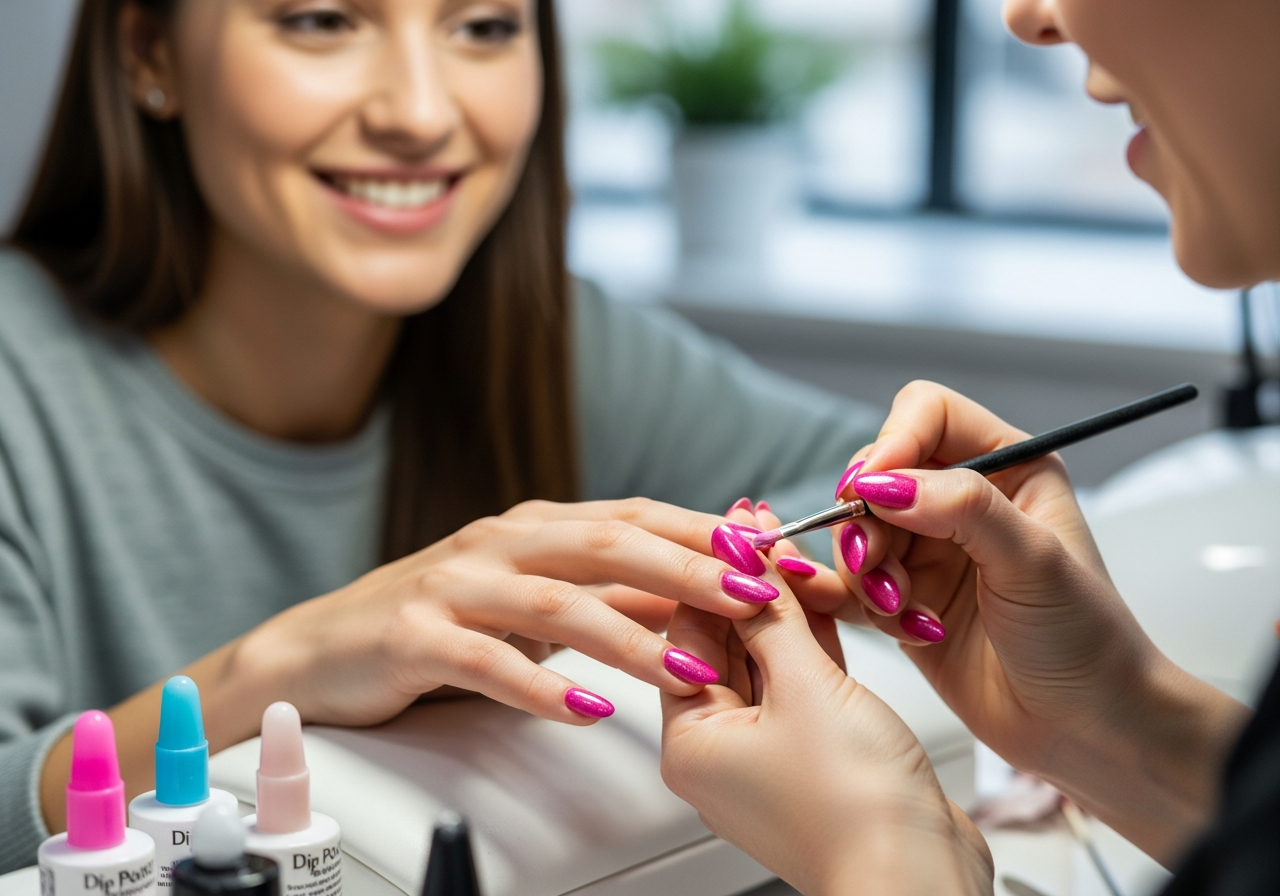
Dip Powder for Healthy Nails: A Professional’s Guide to Protection and Strength
After two decades behind the nail station, I’ve watched countless trends come and go. But dip powder? This technique has genuinely changed how I approach nail health with my clients. Let me share what I’ve learned about keeping your nails strong and beautiful with this method.
Key Takeaways
Q: Does dip powder actually protect my natural nails? A: Yes, it creates a durable shield against daily wear, chemicals, and impact damage while lasting around three weeks.
Q: Is dip powder safer than gel manicures? A: It eliminates UV lamp exposure entirely, reducing potential skin and nail damage from harmful rays.
Q: Can dip powder strengthen weak nails? A: Quality formulas contain calcium and vitamins that nourish nails over time when applied and removed properly.
Q: What’s the biggest mistake people make with dip powder? A: Peeling it off themselves—professional removal is essential to prevent nail plate damage.
The Real Benefits I See Every Day
Protection That Actually Works
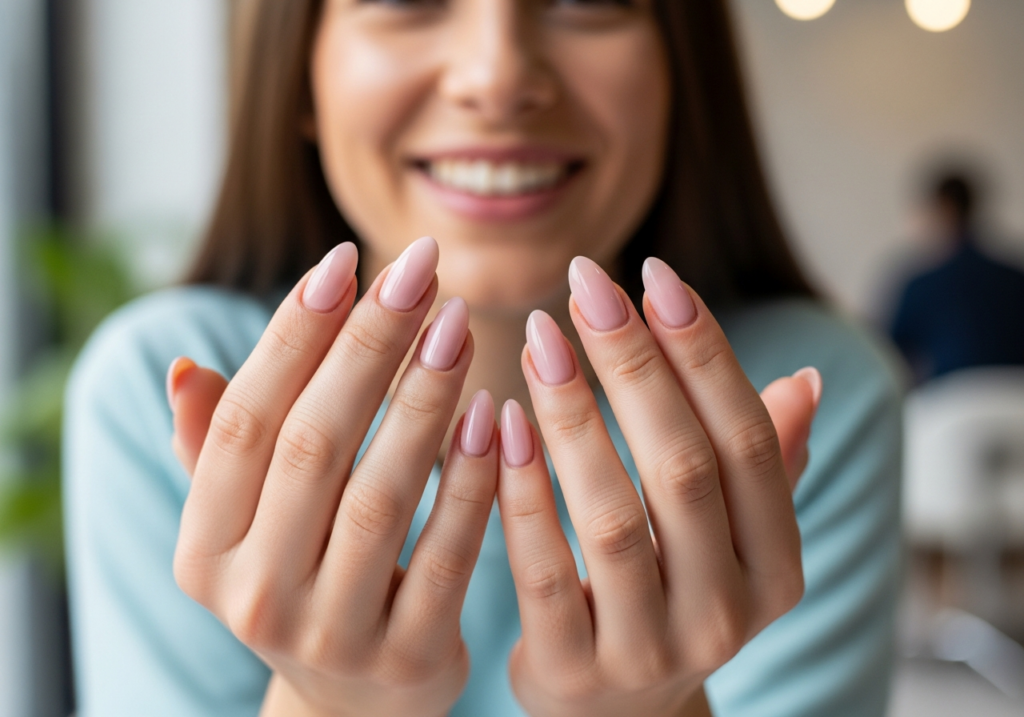
Here’s what happens when you apply dip powder correctly: you’re building a resilient barrier between your nails and everything trying to damage them. I’m talking about harsh cleaning products, constant hand washing, the accidental door frame collision (we’ve all been there), and even just the natural wear from typing all day.
Think of it like this—your natural nail is precious, and dip powder acts as its bodyguard. That protective layer doesn’t just sit there looking pretty; it actively prevents chips, breaks, and splits that would otherwise have you reaching for another appointment in a week.
Durability Means Fewer Chemical Exposures
The three-week lifespan isn’t just about convenience, though my busy clients certainly appreciate that. What matters from a health perspective is this: fewer manicures mean fewer times you’re exposing your nails to acetone, files, and removal processes.
I’ve watched clients with chronically weak nails actually improve after switching to dip powder, simply because we’re not constantly stripping and reapplying products every week. Their nails get time to breathe and recover between services.
No UV Lamp Required
Let me be straight with you—I never loved putting my clients under UV lamps. The research on UV exposure kept me up at night. With dip powder, that worry disappears completely. No curing lamps, no UV rays, no need for protective gloves or sunscreen during your manicure.
The application process relies on air-drying activators instead. Your nails harden naturally through a chemical process, not through light exposure. For clients concerned about skin aging or those with heightened UV sensitivity, this difference is everything.
Strengthening From Within
Not all dip powder systems are created equal, and this is where product selection really matters. Quality brands incorporate ingredients that actively benefit your nails:
Nail Nutrition: Key Ingredients & Benefits
A quick guide to ingredients that strengthen, protect, and beautify your nails.
Ingredient Breakdown
| Beneficial Ingredient | Primary Function | Long-Term Effect |
|---|---|---|
| Calcium | Strengthens nail structure | Reduces brittleness and breakage, improving resilience over time. |
| Vitamin A | Promotes healthy growth | Improves overall nail quality and encourages consistent, strong growth. |
| Vitamin E | Protects against damage | Helps maintain moisture balance and defends nails from environmental stressors. |
| Vitamin B5 (Panthenol) | Increases flexibility | Prevents splitting and peeling by improving nail elasticity. |
| Vitamin D3 | Supports calcium absorption | Enhances structural integrity for healthier, stronger nails over time. |
I’ve seen these formulations work wonders, especially for clients recovering from years of acrylics or those with naturally thin nails. The nourishment happens gradually—you won’t see results overnight, but after three or four applications, the difference becomes obvious.
Maintaining Nail Health: What I Tell Every Client
Application Standards Matter
When you sit in my chair, I’m not touching your cuticles with cutting tools unless absolutely medically necessary. Aggressive cuticle work opens the door to infections and inflammation. Instead, I gently push them back and focus on proper nail prep without compromising your nail’s natural protective barriers.
Your technician should be cleaning and lightly buffing the nail surface—not filing it down to a fraction of its thickness. If you walk out of a salon with burning or overly thin nails, that’s a red flag.
The Double-Dipping Debate (It’s Not Actually a Debate)
Here’s a hill I’ll die on: shared dip powder containers are unhygienic. Period. I don’t care how many clients tell me “it’s fine” or “I’ve never had a problem.”
The proper method involves pouring powder over your nail or using individual containers per client. When multiple people dip directly into the same jar, you’re creating a bacterial and fungal playground. I’ve treated nail infections that traced back to this exact practice, and research confirms the contamination risks.
At professional salons like Malvern Nail Salon, hygiene protocols prevent cross-contamination. Don’t compromise on this.
Product Quality Isn’t Negotiable
Walk away from any dip powder system containing:
- Formaldehyde (linked to respiratory issues and skin reactions)
- Toluene (a neurotoxin that affects your nervous system)
- MMA (methyl methacrylate—actually banned in many places for causing severe allergic reactions)
These chemicals have no place near your nails. Quality systems cost more upfront but save your nail health in the long run. I stock brands that prioritize safety without sacrificing performance, and my clients’ nail health statistics speak for themselves.
For more details on healthy nail services, check out the range of options at Paolina Nail Spa.
Professional Removal Is Non-Negotiable
I cannot stress this enough: Do. Not. Peel. Your. Dip. Powder.
I’ve seen clients remove entire layers of their nail plate this way. The damage takes months to grow out, and in severe cases, the nail never fully recovers its original strength. The temporary satisfaction of picking at lifting edges isn’t worth permanent weakness.
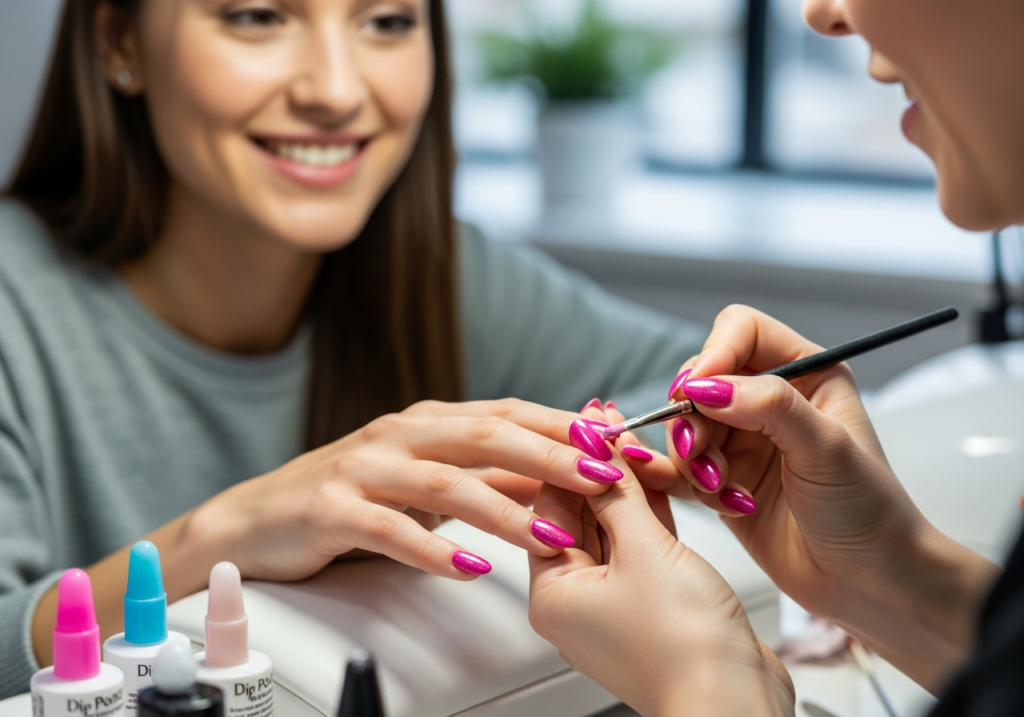
Proper removal involves acetone soaking (usually 10-15 minutes), gentle loosening with a wooden tool, and careful buffing. No force, no prying, no shortcuts. If your salon rushes this process or uses aggressive removal techniques, find a new salon.
Comparison: Dip Powder vs. Other Nail Enhancement Methods
Nail System Comparison
Compare dip powder, gel polish, and acrylics to choose the perfect style for your nails.
| Feature | Dip Powder | Gel Polish | Traditional Acrylic |
|---|---|---|---|
| Application Time | 30–45 minutes | 45–60 minutes | 60–90 minutes |
| Longevity | 3–4 weeks | 2–3 weeks | 3–6 weeks |
| UV Exposure | None | Required | None |
| Removal Difficulty | Moderate | Easy | Difficult |
| Nail Strengthening | Yes (with quality formulas) | No | Can weaken over time |
| Odor Level | Minimal | None | Strong chemical smell |
| Natural Look | Excellent | Good | Can appear bulky |
Common Concerns I Address Daily
“Will dip powder ruin my nails?”
Not if it’s done correctly. The myths around dip powder damage usually stem from improper application or removal. Your nail technician’s skill matters more than the product itself.
When clients come to me with damaged nails “from dip powder,” we usually trace the problem back to aggressive prep work, contaminated products, or self-removal. The dip powder itself? Rarely the culprit.
“My nails feel weak after removal”
This is normal temporarily. Your nails have been covered for weeks—they need time to adjust to air exposure again. I recommend a keratin treatment and cuticle oil regimen for about a week before your next application.
What’s not normal is peeling, severe thinning, or pain. Those symptoms indicate damage during application or removal, not a natural response to the product.
“Is it really healthier than other options?”
The answer depends on your specific nail concerns. For clients with thin nails, UV sensitivity, or those who need long-lasting color without frequent chemical exposure, dip powder is often the healthier choice. For someone with severe allergies or those who need flexibility to change colors frequently, other options might work better.
I evaluate each client individually. There’s no one-size-fits-all answer in nail care.
My Professional Recommendations
After years of perfecting dip powder application, here’s my honest advice:
Start with healthy nails. If your nails are already damaged, spend 4-6 weeks strengthening them with treatments before applying dip powder. Building on a damaged foundation only leads to disappointment.
Choose your technician carefully. Technical skill trumps salon aesthetics every time. Ask about their sanitation practices, product brands, and removal techniques before booking. A skilled technician at a modest salon will serve you better than a novice at a luxury spa.
Maintain between appointments. Cuticle oil isn’t optional—it’s essential. I recommend applying it twice daily, especially around the growth line where new nail meets product. This prevents lifting and keeps your nails hydrated.
Listen to your nails. Pain, excessive weakness, or persistent problems aren’t normal. Your nails are communicating that something needs to change, whether that’s your technician, your products, or taking a break from enhancements entirely.
Consider nail health services. Many professional salons, including Paolina Nail Spa, offer specific nail strengthening and repair treatments that complement dip powder applications.
Frequently Asked Questions
How often should I give my nails a break from dip powder?
Honestly, if application and removal are done properly with quality products, your nails don’t necessarily need breaks. However, I recommend one week off every 3-4 months to assess your natural nail health and provide intensive conditioning treatments. This gives you a baseline to ensure the dip powder is truly working for you.
Can I apply dip powder at home?
Technically yes, but I strongly advise against it initially. The learning curve is steep, and mistakes—particularly in prep and removal—cause significant damage. If you’re determined to DIY, get professional applications first to understand proper technique, invest in quality products, and watch detailed tutorials. Still, nothing replaces hands-on training.
Why do my dip powder nails sometimes lift after a few days?
Lifting usually indicates inadequate prep work. Oil, moisture, or dead skin on the nail plate prevents proper adhesion. Sometimes it’s environmental—excessive water exposure, hand lotions with oils, or naturally oily nail beds contribute to early lifting. A skilled technician can identify your specific cause and adjust prep accordingly.
Is dip powder safe during pregnancy?
While the lack of UV exposure makes dip powder appealing during pregnancy, you should avoid the fumes from activators and sealers in poorly ventilated spaces. I recommend applications during your second trimester in well-ventilated salons, but always consult your healthcare provider first. Some pregnant clients prefer to wait until after delivery just to be cautious.
Can dip powder fix damaged or weak nails?
It can’t “fix” them, but it can protect them while they grow out healthy. Think of it as a cast for a broken bone—it provides structure and protection during the healing process. Combined with strengthening ingredients in quality formulas, you create optimal conditions for nail recovery. Just remember that severely damaged nails might need professional treatment before any enhancement.
How much should I expect to pay for a quality dip powder manicure?
Prices vary by location, but expect $40-70 for a full dip powder manicure in most areas. Significantly cheaper services often cut corners on products or hygiene. More expensive doesn’t always mean better, but rock-bottom prices should raise questions about product quality and sanitation standards. Your nail health is worth the investment.
Dip Powder Quiz
✨ Your Dip Powder Result ✨
Your nails deserve the same care and attention you give the rest of your body. Dip powder, when done right, offers a protective, strengthening option that keeps you looking polished while actually supporting nail health. Just remember: technique and product quality matter more than the enhancement method itself. Choose wisely, maintain consistently, and your nails will thank you for years to come.